Showing posts with label Narcos. Show all posts

Sunday, November 1, 2015

Jack Rausch: From the Cartel to Christ (Part II)

51QSx2fCIOL._SX331_BO1,204,203,200_.jpg

Cocaine was flooding into the United States at an unbelievable rate by 1985. The Medellín Cartel was responsible for almost 90% of the cocaine that was smuggled into the country.  They were grossing around $80 million a day from the cocaine.

Cocaine prices were dropping in the US by 1987, not because less people were buying but because of the large amounts the Cartel was bringing into the country.  In 1985 a kilo of cocaine was worth $32,000 in Newport Beach CA.  In 1987 that same kilo would be worth only $18,500.  The Colombians, like Jack Rausch, had left Miami for SoCal.  The traditional route for the Cartel was through the Caribbean and by 1983 Carlos Lehder (the Cartel’s head of transportation) was finished in the Bahamas.  Carlos was reduced to hiding in the jungles of Colombia.  

Jack Rausch was having big success in SoCal. He moved load after load of cocaine until he felt the heat from law enforcement.  He had been in a restaurant waiting to exchange car keys with his contact when a woman walked by and flirted with him.  He noticed that she was sitting with another woman and neither of them had touched their food.  When the contact arrived, Jack left with the keys.  He saw that he had a tail. He ditched the cars following him, but he saw the woman drive by as he was parked.  The heat was on, so he dropped off the contact’s car in a parking lot and let him know where the empty car was parked.  He quickly dumped his pager and emptied his stash house.  He called his office in Colombia and gave them his new pager number.  That was how the game was played back then.  If the heat was on you just dumped everything and waited it out.  The law only had so many resources that they could spend on a guy doing nothing.  

José Gonzalo Rodríguez Gacha, one of the members of the Cartel had developed smuggling routes through Mexico.  He helped flood the SoCal market with cocaine in the 1980’s. People who were not in SoCal at the time cannot imagine the amount of cocaine that was going around.  It was every bar, night club, restaurant and party.  So many people were buying it or dealing it.  It was not uncommon to see multiple people in restroom stalls sniffing cocaine when you walked in to use a restroom.

Looking back on his life, Jack Rausch figured out that he moved enough cocaine to supply 40 million doses (or hits) to people.  Jack knew what he was doing was wrong but things like right and wrong get lost in all the money coming your way.  In the 1980’s all of us thought the party would never stop.  We never thought that we would see the year 2000.  It is funny because we not only saw the year 2000 but saw our 30s and are now in our 40’s.  In those days Jack and I would pull up in front of our favorite sushi place in Aliso Viejo in our Corvettes.  The last time we met, much older, we were both driving regular Toyota trucks.

Jack had to make a trip to Medellín to see the bosses around this time.  It was a really bad time in Colombia because the Cartel was at war with the Government of Colombia but it was really the United States that was behind it.  The US was the world's biggest consumer of cocaine and by the mid-1980’s over 500 tons were being used a year. The politicians were under fire from everyone to do something about the cocaine epidemic. The cause of the problem was not the Cartel shipping hundreds of tons of cocaine to the US it was the people in the US using it.  America never likes to take responsibility for its actions.  The US Government  pressured the Colombian Government to let them extradite drug traffickers to the US to face trial.  The Cartel members knew that nobody ever beats the US Government in a trail so they fought to stay in Colombia.  

The biggest criminal in the world was Pablo Escobar at this time.  He was pulling down more cash than any criminal before him or since.  The Cartel offered to pay the Colombian National debt if they would not extradite them.  The Government passed on his offer, so Pablo started a war.  Pablo and Carlos Lehder were both heavy into politics but they both had to go underground.  They both started working with paramilitary groups in the jungles.  They brought in Israeli mercenaries to train their private groups and assassins also know as sicarios.  The Cartel sicarios like to drive up on a motorcycle and blast a target with a pistol.  This is how my friend was murdered in Newport Beach California in 1987.  I helped the Deadliest Warrior reenact this hit on an episode in season two.   “Plata o plomo” which translates to “silver or lead” was Pablo Escobar's motto.  You would either take a cash bribe, or be shot full of holes.  Pablo also offered up a million peso reward to anyone who killed a police officer.  

This was the Medellín that Jack left Orange County for in the 1980’s.  He was able to secure a big job for Pablo to move an 800 kilo load. When he got back to the US, Jack was happy at the time because he was moving serious weight for the big boss.  He never thought that he was selling his soul for a little plata. He was invited to Kevin’s disco which was in the mountains overlooking Medellín.  When he arrived the parking lot full of bodyguards with machine guns and the first thing he thought was it was a trap. Jack was not going to be killed, Pablo was inside.
Jack left after a few minutes, not wanting El Doctor to notice him.  A few days later he was at another Cartel dinner spot when a waiter came over and told them that DAS, the Colombian FBI, was going to raid the place.  Jack and his buddy took their pistols and went up to the roof through a secret passage.  DAS came and went but before they left the roof another two car loads of heavily armed men pulled up.  When Jack was leaving the restaurant one of the men came up and shook his hand and said you did a great job El Mono.  El Mono was his nickname.  The guy who shook his hand was Pablo’s top sicario.

We are not selling to addicts or kids.  That is what Jack and the rest of us told ourselves and each other in the 1980’s.  I mean technically, we did not, but what we did sell made it to the little dealers, which made it to addicts and kids.  I know Jack has thought about the damage he did and he knows there is no upside to drug use.  It is not glamorous or fun in anyway.  Pablo Escobar was a murderer who had people attack the Palace of Justice in Colombia and murder the judges.  He had Avianca Flight 203 blown out of the air. I have searched online for a passenger list of those 107 people that were killed and you cannot find it.  Pablo Escobar is a subject of movies and books.  This year I saw a Pablo Escobar Halloween costume.  These drug groups never last long because once the leader is gone that is the end of the group.  Pablo gave up Carlos Lehder to be extradited to the US.  He gave up a number of traffickers. There is no honor among thieves.  

Jack Rausch was enjoying success, or what he thought was success.  Life was materially good but inside he was lost.  It was the Mid-1990s and he was still in the game.  He had stopped using drugs and drinking, but his life was dark.  All the money came and went but happiness eluded him. The cocaine game had changed from the 1980’s.  The prices were down and it was not as socially accepted. The cheap drugs Meth and Ice had taken over as the high of the day.  Colombian traffickers no longer wanted to take a chance of being locked up forever in a concrete box in the United States.  Mexico had been a shipping point since the eighties and the groups inside the country had become powerful from the influx of cash.  They had the people in the US because of the non existent border.  They had their own built in distribution network that was easy to staff.  The treaties made bringing truckloads across the border easy.  Jack was now being directed by the office in Medellín to meet with Mexicans who smuggled the cocaine into the country.  Mexico as a country is even worse than Colombia when it comes to corruption.  The former President's brother had a bank account with over 60 million that he got from drug traffickers.  In the border towns law enforcement either are corrupt or dead.  Mexico is really a Narco State like the shows like to portray Colombia in the 1980’s. Our Government just won't admit it.  Jack began a 10,000 kilo load that the office in Colombia put together with some Mexican traffickers.

Jack had a used car lot and life looked good.  He figured that this would be his final job for Medellín. He met the Mexicans when the load was in SoCal and he received the first 550 kilos.  He dropped off 300 and then was getting ready to drop off another 200 when he noticed the helicopter.  He was soon surrounded by flashing red lights right there on the street in Aliso Viejo.  Jack's time on the street was over.  

He was defiant when locked up and he told law enforcement that he worked alone.  True to form for the criminals of today he was basically alone.  Days turned to months and so on as he waited for a court date.  He was given a Bible, which is the one thing they cannot take from you even when you are in the hole. One day when he came out he saw some men seated around a table praying.  He decided to join them.  Many years later he began his ministry after a lot of school and worship.  People can change, but only if they are willing.  Once they embrace God anything is possible.  There are not many people from that time period left. Many of the people we knew are no longer with us.  Those that stayed in the life are locked away forever.  Time for all of us to do some good.  Please read From the Cartel to Christ for the full story.

Saturday, October 24, 2015

Narcos and Colombia - Jack Rausch

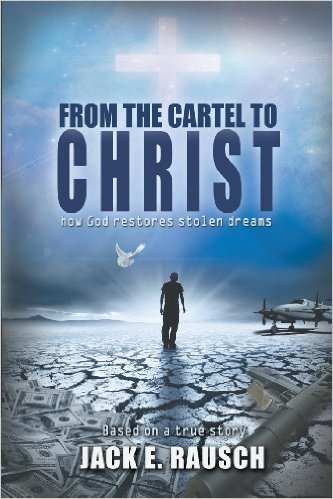
I thought I would switch things up this week.  The show Narcos on Netflix is a hit.  It has brought back the 1980’s cocaine world with a sterilized Hollywood view. The show tells the story of Pablo Escobar, the Medellín Cartel (which included Jose Gonzalo Rodriguez Gacha, Jorge Ochoa and his brothers Juan David, Fabio, the DEA Agent who pursued them). The movie Blow told the same story from the view of an American pilot. I thought some of you would want to know what it was really like inside the Cartel on a day to day basis. They all show the drug lords sending off tons of cocaine and then bringing home bags of cash.  How was the cocaine distributed and the money picked up? I urge you to read From the Cartel to Christ: How God restores stolen dreams. This book will take you into the dark world that was the cocaine trade of the 1980’s.

Why would I write about this book?  I will tell you the story.
In 2005 when I was writing Breakshot I started reaching out to people from my past. I ended up speaking to someone who I've known since high school.  She dated a man named Jack Rausch, who I became good friends with in the 1980’s.  I liked Jack and had not planned on writing about him.  I also figured he was either dead or locked up forever.  If Jack was not locked up, I figured he might be living in Medellín, Colombia where he grew up.  The way they deal with people in that city is not good and I did not want to cause him any problems.  So I did not include him by name in my book.  Jack had been a player with the Medellín Cartel for years in the 1980’s and the early 1990’s.
In 2009 I was put in touch with Jack and we decided to meet for lunch.  I left my office and went to El Polo Loco in Lake Forest.  This was a long way from our old days of Sushi and nightclubbing.  I was a little nervous because I rarely saw anyone from my past and I was not sure how he would receive me. When he walked inside I knew I made the right choice.  He greeted me with a strong handshake and a smile.  The years had been good to Jack, or so I thought.

We sat down to lunch and he told me the story that was his life since I last saw him. He continued doing the same thing that he always had in the 1980’s.  He had been arrested for his part in moving a 10,000 kilo load of cocaine.  He was charged with delivering 500 kilos of that load himself. For your information that is 1102.31 pounds of cocaine. He had been locked up since the mid 1990’s but according to him, his life was good.  He told me he had found Christ and that is when I rolled my eyes inside my mind.  I thought, “Oh great, another criminal who found God when he was in trouble.” I figured some kind of pitch was coming in a minute. It never came. The more I spoke to Jack, the more I realized that he was speaking the truth.  He was not in trouble, he was no longer a criminal and he was everything he said he was. He was a working guy who also worked at a ministry.  He never pushed it on me and now I know he knew I was not ready for it yet. He was happy and that was the thing I first picked up on.  In the 1980’s neither of us were ever happy, even with large amounts of cash coming in daily. Then he brought up that he was writing a book.  I thought that it would be great for him to get it out.  From the Cartel to Christ came out last year and it is a must read for anyone interested in the 1980’s Southern California drug world.  

I read it and it made me feel a little sick to my stomach.  It brought me back to a place and time that I was not sure I wanted to go back to at this time in my life.  

Jack’s story begins in Medellín where Jack grew up after his father left his mother.  Jack's father had started a couple of profitable banana plantations in the jungle regions of the country.  Jack however had no interest in school or bananas.  He wanted to be a mafioso.  A mafioso in Colombia is not the same as we know it.  Colombians had historically been known as smugglers in South America but as tastes changed, they moved into cocaine and they became known as mafioso.  Jack was in the right place at the right time if you consider that life good. Times were changing in the way they smuggled cocaine to America. It went from the mom and pop use of mules (aka people who carry the cocaine into the country) to airplanes filled with kilos in the 1980’s.

Jack begins when the Cartel was born and he is one of the few who made it out alive.
Jack’s first job had him waiting in the jungles of northern Colombia when a small Cessna plane made a quick landing on a makeshift runway carved out of the jungle.  Jack waited for a tractor loaded with canvas sacks full of kilos to pull up.  Another crew quickly refueled the plane as Jack and another man threw the sacks into the seatless plane.  The plane quickly accelerated and took off just barely clearing the trees.

Jack was paid 100,000 pesos or about 300 dollars in the early 1980’s. That was not bad money for his age or the times, but that is not what he wanted.  He was a newly licensed pilot and he wanted in on the transportation money.  Pilots could net 5,000 a kilo for transporting it to the US and they could carry about 400 kilos on a small plane.  They made a lot but they lived short lives.  The planes would run out of fuel and drop into the ocean or crash in the jungle never to be seen again.  Jack made a couple of runs but life as a pilot did not work out.  He was instead sent by the traffickers to the US to oversee the loads that came into the country from Colombia. They had started working together to put together huge loads that would serve to spread out the risk.  The system worked because before if a 500 kilo load was sent by one group and it was lost it was a huge hit.  The new way the load was split between five groups and that softened the hit if it was busted. The Cartel itself was not just the men whose names we know but a lot of small traffickers and later Traqueteroros, drug traffickers from good families that wanted to dabble.  They would pool investors cash and daddys money to put together loads. He started working in Miami until things changed there and the Colombians started migrating to Southern California. He was told that the office handling distribution in California had become available.  What that really meant was the guy who ran it before was dead or under arrest.  So Jack was soon on a plane to SoCal but just before he boarded the flight in Miami some DEA Agents grabbed him and had his baggage brought to them. It was bad to be a Colombian flying from Miami to Los Angeles in the 1980’s.  Once Jack landed at LAX he was picked up by another DEA team and searched again.  Once freed Jack made his way to a cheap airport hotel where he rested and watched TV.  A few days later he went to a payphone and made a call to the Miami office.  The next day his contract picked him up at the hotel and he disappeared into urban sprawl that is SoCal.  The Colombians had set up a system of offices to handle the importation, distribution and the handling of the cash.  

People have to remember that that cellphones were a few years away.  Pagers just beeped and you had to call into a service who gave you a message.  I paid 800 dollars for a pager and it was not even a display pager it just beeped.  Payphone calls were dime then and they all took incoming calls.  They set up a number of offices in Colombia that were a kind of logistical support.  Guys like Jack had the numbers memorized and they would call in with their code names.  They would be given contact names and numbers. They also set up other offices here in the US to serve the same purpose.  These offices never came into contact with the product aka cocaine so they didn't have the heat.  Jack and others would get here and chill in hotels until they felt there was no heat.  They would then get fake papers and IDs then move to a nice middle class neighborhood.  They would rent houses or condos buy cars and live normal lives until they got the call.  They would then go someplace and be handed a set of keys for a truck.  They would then drive the truck to a house they rented and unload the kilos of cocaine.  They would unpack it to protect the shipping method and separate the kilos for different groups here in the US.  Then they would drop off the truck and somebody would pick it up.  A week would be spent dropping off the load and then it was time to close down the house and find another. They would also get calls to pick up cash.  Rule number one was the cash and the drugs were never in the same place at the same time. That is why the way it is portrayed in the movies with guys standing around with machine guns when a deal goes down is stupid and wrong.  What do a bunch of Harvard guys know about the drug world but what they imagine?   Waiting for a load was a time for many like Jack to relax and have fun.  

Jack rented a home in Orange County and started going to school.  Life was normal until he had to pick up a load.  Then it was unpacking the Kilos marking down the symbols or stamps.  They would be wrapped blocks stamped with a penny or a queen with numbers and each one of these would be recorded into a ledger book.  Then they would divide them up according to deliveries.  They would drop off hundreds and then even lower amounts like 20 kilos which were closer to the street level dealer. Jack had to make a number of trips back to Medellín because the business was very much hands on and what happens there affects what went down in SoCal.

Next week I will write about what was going on in Colombia when El Doctor was running the business. I suggest buying the book if this topic interests you and you want a more detailed account.

From the Cartel to Christ on Amazon: